
Take Your Next Step.
We believe that everyone has something unique to offer. We offer a variety of ministries and programs designed to help you grow in your faith and explore new possibilities.



Sundays at Rockville
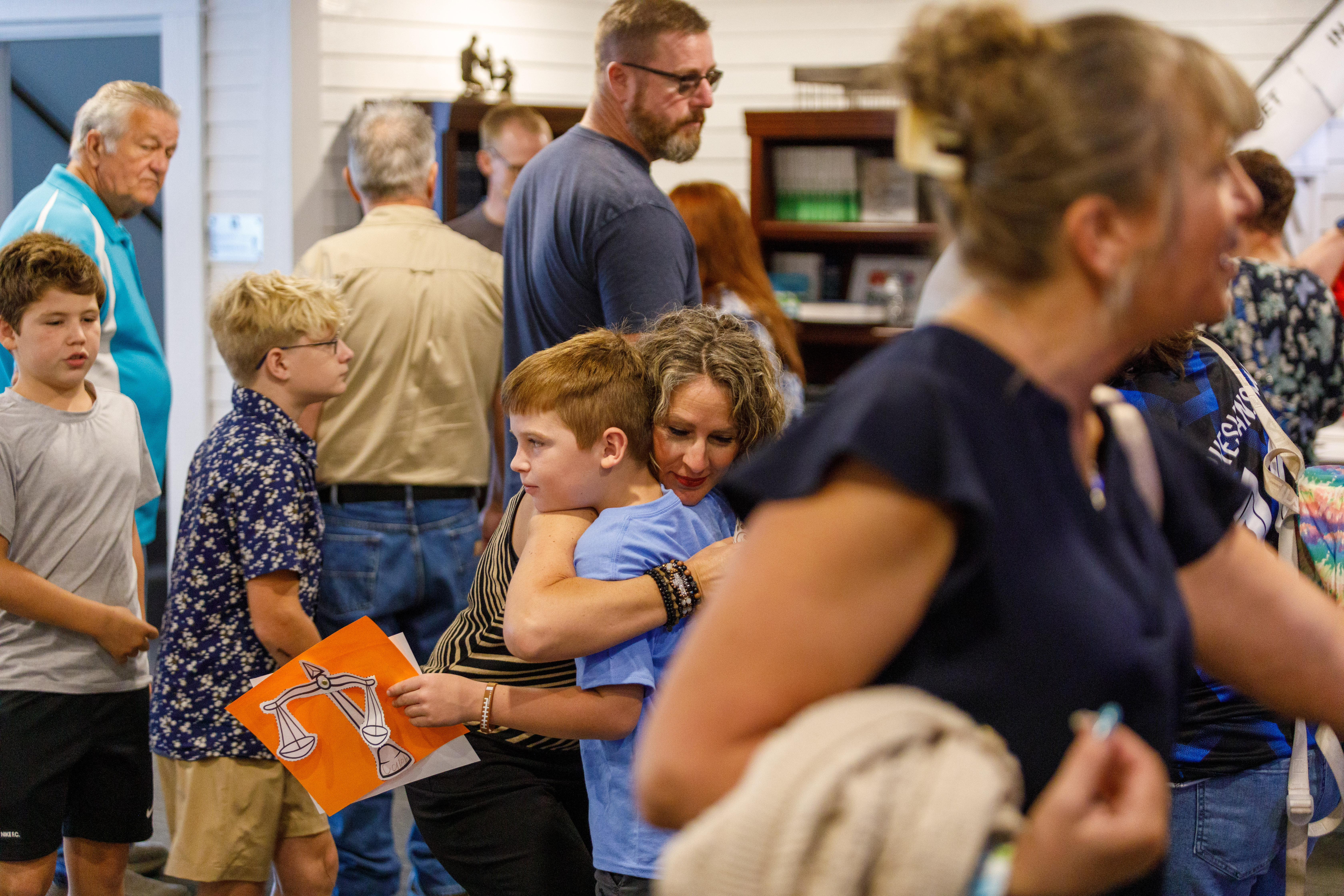
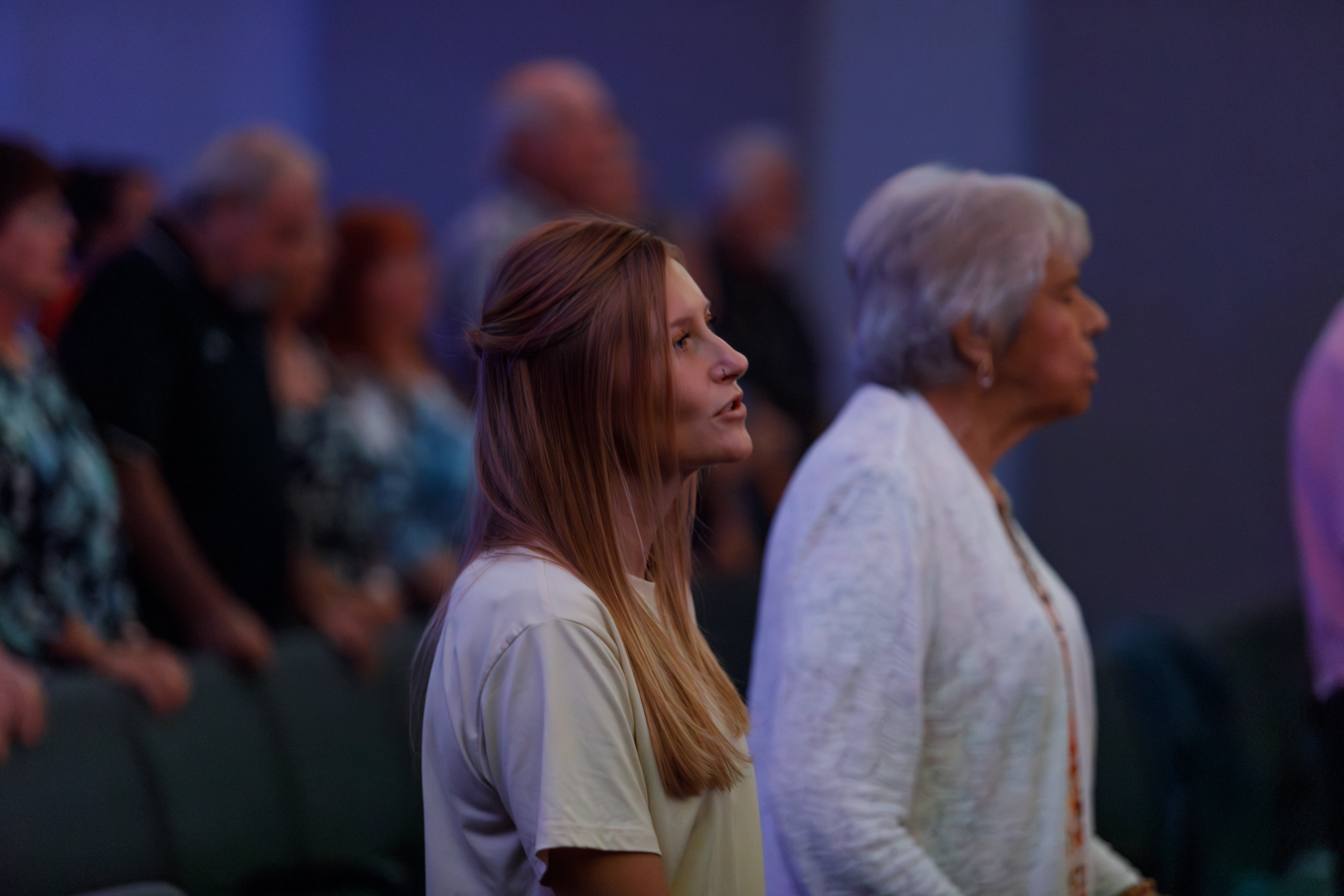
Join us on Sunday for a time of worship, biblical teaching, and fellowship as we gather together to honor God and grow in our faith. Whether you’ve been following Jesus for years or are just beginning to explore faith, you’ll find a welcoming community ready to worship and grow with you.

Life Groups
Life Groups provide a place to build meaningful relationships, study God’s Word, and encourage one another in faith.

Student Ministry
Our student ministry gives students a place to connect with friends, grow in their relationship with Jesus, and learn how the Bible applies to everyday life.
Water Baptism
Baptism is an important step of faith that publicly identifies us with Jesus and reflects our commitment to follow Him. It is an opportunity to celebrate new life in Christ and take a meaningful step forward in your faith journey.
What does the New Testament teach about baptism?
Some select key passages:
- Matthew 3:13-17 – Jesus’ baptism serves as an example for Christians
- Matthew 28:19 – The mission of the church is to make disciples by baptizing and teaching. Baptism begins the lifelong process of discipleship.
- Acts 2:38-41 – Faith, repentance, and baptism are each an important part of a person’s response to the gospel. The promises of forgiveness of sins and the gift of the Holy Spirit are associated with baptism.
- Acts 8:12 – Belief and baptism go together
- Acts 8:36 – The natural response of new belief is baptism
- Acts 16:33 – New faith in Christ leads to immediate baptism. Baptism is not a decision to postpone.
- Acts 22:16 – In baptism, we call on God, asking for forgiveness and new life
- Romans 6:3-5 – We are buried and united with Christ and his saving work in baptism
- Galatians 3:27 – In baptism, we are “clothed” with Christ
- Colossians 2:12 – We are buried and raised with Christ in baptism. Baptism and faith are closely related in the process of becoming a Christian.
- 1 Peter 3:21 – Baptism is a “pledge” of surrender and commitment to God
Additional passages: Mark 16:16; John 3:3-5; Acts 9:18, Acts 10:47-48, Acts 16:15, Acts 18:8, Acts 19:5; 1 Corinthians 6:11, 12:13; Ephesians 4:5, 5:26; Titus 3:5
What is the biblical form/mode of baptism?
In the Christian Church we practice the “form” of immersion for several reasons:
First, the family of Greek words employed in the New Testament (“bapto,” “Baptisma,” and “baptizo”) literally mean “dipping under,” “dunking,” “submerging,” and “immersing.” Our word “baptism” is a transliteration [sounding out of sounds] of the Greek word. “Immersion” is a more accurate translation of the Greek terms for baptism.
Second, the New Testament contains several clear examples of immersion including John 3:23 and Acts 8:38.
Third, church history tells us that baptism by immersion was the universal norm for the first several centuries of the Christian faith.
Fourth, and perhaps most important, the Apostle Paul describes baptism as a burial with Christ and a resurrection to new life in Romans 6:3-4 and Colossians 2:12.
The gospel image of death and resurrection is clearly dramatized and preserved through the baptismal mode of immersion.
Related, 1 Peter 3:21 compares baptism to the waters of the great flood that destroyed the ancient world but spared the lives of Noah and his family. Only baptism by immersion invites such comparisons.
Who should be baptized?
In the Christian Church we practice “believer’s” baptism; that is, we maintain that a person must consciously and personally love, believe in, and commit his or her life to Jesus for baptism to have its true meaning and effect (for example: Mark 16:16; Acts 8:12; Colossians 2:12). Moreover, a candidate for baptism must be mature enough to comprehend and repent of sin (Acts 2:38).
Historically speaking, the Church began to baptize infants in the third and fourth centuries because of four, related, non-biblical factors: a growing sacramental view of baptism; the developing doctrine of original sin; a high infant mortality rate; and, the establishment of Christianity as the official state religion at the end of the fourth century. Biblically speaking, however, the New Testament contains no commands to immerse or sprinkle infants. It also does not report any specific examples of small children being baptized.
Many people come to RCC as adults who were sprinkled as infants by their parents. It is important to acknowledge that parents who have their children baptized as infants are acting in faith with Godly intentions. A parent’s desire to dedicate his or her child to God is beautiful and praiseworthy; however, the Bible clearly does not teach that we are saved by someone else’s faith. Simply put, no one else can make you a Christian.
The New Testament presents baptism as a person’s individual decision to commit his or her life to God. Consequently, we believe that adults who were sprinkled as infants should be baptized by immersion to complete their commitment to Christ and to be faithful to the clear teaching of scripture.
Why should we baptize?
What does the Bible teach about the purpose of baptism?
Restoration Movement churches, such as Rockville Christian Church, have traditionally answered this question by saying that we baptize for the forgiveness of sins. This is a shorthand way of saying that baptism is the normal, outward and objective moment when a believer makes a formal request, or appeal, to God for forgiveness and new life.
There are many New Testament passages that inform this understanding, including:
- Mark 16:16 – Belief and baptism are paired as dual requirements for salvation.
- Acts 2:38 – We are commanded to be baptized for the forgiveness of sins.
- Acts 22:16 – Baptism is associated with cleansing and is described as the moment when we call on the name of the Lord.
- Romans 6:3-4 and Colossians 2:12 – We are united with Christ and buried with Him in baptism.
- 1 Corinthians 6:11 – Baptism is associated with radical new life in Christ.
- Galatians 3:27 – We are promised that we are clothed with Christ in baptism, which is connected to our adoption into God’s family.
- John 3:5 and Titus 3:5 – Baptism is connected to spiritual rebirth and new life in the Spirit.
- 1 Peter 3:21 – Baptism is described as an appeal, pledge, or prayer to God.
These New Testament passages, along with others, have historically contributed to the Christian Church’s understanding of baptism as an objective, outward appeal to God for forgiveness and new life.
Professor Jon Weatherly of Johnson University comments: “Baptism signifies the sinner asking the Lord for the blessings of salvation, and the Lord responds by granting those blessings. Baptism is more than ‘an outward sign of an inward grace,’ or ‘an act of obedience,’ though it is at least those things. Baptism is the divinely authorized act by which the repentant sinner approaches God and in which God fulfills his promises to the repentant sinner.”
The Restoration Movement’s high view of Christian baptism naturally leads to a common question: “So, is baptism necessary for salvation?” There are several ways to respond.
First, this is not a biblical question. The Bible does not ask or answer the question in those terms. The New Testament does not use the language of “necessity.” One reason the Bible does not address this question may be that there are no unbaptized Christians in the New Testament. If you are a Christian in the New Testament, you are baptized.
Second, the only thing necessary for salvation is God. Salvation is made possible by God’s grace through the cross of Jesus. You could remove baptism, repentance, or faith from conversion, and a case could be made that salvation would still be possible. But if we remove God’s grace, there is no salvation.
Third, while God is ultimately what is necessary for salvation, what does the New Testament present as the normal response to the grace God offers th
What practical “needs” does baptism meet?
Christian baptism addresses two essential needs: a believer’s need for assurance of salvation and the church’s need to know who is a believer. We can consider each of these needs in turn.
How do we know we are saved? Baptism answers this question and provides confidence in our relationship with God. Baptism is the event to which the New Testament authors point when giving Christians assurance of their forgiven status before God. The Bible does not point us to the actions of our parents through infant baptism, confirmation as a teenager, or a prayer we prayed during a spiritual revival.
The Bible is silent about these substitutes for baptism. But we do not need substitutes. Baptism by immersion provides a clear physical sign and seal of our being clothed in Christ.
Galatians 3:26-27 is an important passage. Seeking to unite the Christians in Galatia, Paul reminds them of their conversion: “You are all children of God through faith in Christ Jesus, for all of you who were baptized into Christ have clothed yourselves with Christ.”
Baptism, like a wedding ceremony, reminds and assures us that there was a definite moment in time when we placed our trust in Jesus and asked to receive the saving benefits of the cross. Baptism gives us confidence in the salvation we have received.
How do we know who is a member of the church? Baptism by immersion answers this question by providing a common experience and visible practice that helps us recognize who has made a commitment to Christ and is therefore able to be a member of the church.
Baptism into Christ is the first and foundational commitment of a biblical church member. It is an experience that unites us as Christians and gives us something we all share in common (Galatians 3:27; Ephesians 4:5).
Get Involved
Fill out your connect card, join us in prayer, or make a gift.
Get Connected
Explore the ongoing ministries in our church.

Copyright 2026 Rockville Christian Church
All Rights Reserved.